If you’re looking for halal filet mignon, you probably want more than just a premium steak; you want to know that it was prepared in accordance with halal standards while maintaining the flavour and tenderness that make filet mignon one of the most popular cuts of beef in the world.
Knowing what makes filet mignon halal will help you make an informed eating decision whether you’re preparing a special dinner, celebrating with family, or visiting a Brazilian steakhouse for the first time.
In this guide, we’ll explain what filet mignon is, what qualifies beef as halal, how this premium cut compares with other steaks, and what to expect when ordering halal steak at a Brazilian churrascaria.
Why Filet Mignon Is Considered One of the Finest Cuts of Beef
Among the many premium cuts of beef available today, filet mignon has earned a reputation as one of the most tender and elegant steaks you can enjoy. Cut from the beef tenderloin, this prized section of the animal sees very little movement during its lifetime.
Because the muscle isn’t heavily exercised, it develops an exceptionally soft texture with minimal connective tissue, resulting in a steak that’s remarkably tender with every bite.
Unlike heavily marbled cuts such as ribeye, filet mignon is naturally lean while still delivering a delicate, buttery texture and a clean beef flavor. Its mild taste also makes it incredibly versatile, pairing beautifully with everything from classic steak seasonings to rich sauces, roasted vegetables, and fine wines.
What Makes Filet Mignon So Popular?
Several qualities set filet mignon apart from other premium steaks:
- Cut from the highly prized beef tenderloin
- Naturally lean with very little connective tissue
- Exceptionally tender texture
- Mild, buttery flavor that appeals to a wide range of palates
- Widely recognized as one of the most luxurious cuts served in steakhouses worldwide
Its combination of tenderness, elegance, and consistent quality is why filet mignon remains a favorite among steak enthusiasts and first-time fine dining guests alike.
Is Filet Mignon Halal? Here’s What Actually Determines It
One of the most common misconceptions is that certain cuts of beef are automatically considered halal. In reality, filet mignon itself is simply a cut of beef, it is not inherently halal or non-halal.
Whether filet mignon qualifies as halal depends entirely on how the beef is sourced, processed, certified, and prepared, rather than where the cut comes from on the animal.
For Muslims who follow halal dietary guidelines, several factors must be considered before a filet mignon can be served as halal.
A Halal Filet Mignon Depends On:
- Beef sourced from halal-approved suppliers
- Proper halal slaughter in accordance with accepted Islamic dietary principles
- Halal certification from a recognized certification body
- Safe storage and transportation that prevents cross-contamination
- Careful kitchen preparation using appropriate food-handling practices
- Separation from non-halal ingredients and cooking surfaces where required
When dining at any restaurant, it’s always recommended to confirm current halal offerings directly with the establishment, as menu selections and sourcing practices may vary by location.
Understanding What Makes Beef Halal: From Farm to Table
For many diners, halal is much more than a label; it’s a process based on ethical sourcing, careful food processing, and adherence to specified dietary standards. Understanding these principles can help guests make informed dining decisions and appreciate the standards behind halal-certified beef.
Humane Animal Treatment
Halal practices place importance on treating animals with care and minimizing unnecessary suffering throughout the handling process. Ethical treatment is considered a fundamental part of responsible food production.
Halal Slaughter
For beef to be considered halal, the animal must be slaughtered according to accepted Islamic dietary requirements by a qualified individual using the prescribed method.
Invocation Before Slaughter
As part of the halal process, an invocation is traditionally recited immediately before slaughter in accordance with Islamic practice.
Complete Blood Drainage
Proper drainage of blood is an essential step in halal processing and forms part of the established requirements for halal meat production.
Certified Supply Chain
Many halal restaurants offering halal beef work with recognized halal-certified suppliers to help ensure the meat meets established sourcing and certification standards before it reaches the kitchen.
Safe Food Handling
Maintaining halal integrity extends beyond sourcing. Proper storage, transportation, preparation, and cooking practices help reduce the risk of cross-contamination with non-halal products throughout the entire process.
Filet Mignon vs. Other Premium Steak Cuts: Which One Is Right for You?
Every premium steak cut offers a unique dining experience, and the best choice ultimately depends on your personal preferences. While filet mignon is celebrated for its exceptional tenderness and lean texture, other cuts bring different qualities to the table, from rich marbling to bold, beef-forward flavors.
For example, ribeye is known for its abundant marbling and juicy richness, making it a favorite among those who enjoy a more robust steak. Picanha, one of the most iconic cuts in Brazilian churrasco, delivers a distinctive balance of tenderness, beefy flavor, and a flavorful fat cap that enhances every bite.
Meanwhile, strip steak offers a firmer texture with a balanced combination of tenderness and flavor, making it a classic choice in traditional steakhouses.
We have created the comparison below that highlights the key differences between some of the most popular premium steak cuts.
| Steak Cut | Texture | Flavor Profile | Best For |
| Filet Mignon | Exceptionally tender | Mild, delicate, buttery | Fine dining, celebrations, lean premium steak |
| Ribeye | Tender with abundant marbling | Rich, bold, juicy | Guests who enjoy flavorful, well-marbled steaks |
| Picanha | Tender and juicy | Robust, beef-forward with a flavorful fat cap | Authentic Brazilian churrasco and rodizio dining |
| Strip Steak (New York Strip) | Firm yet tender | Balanced, hearty beef flavor | Traditional steakhouse dining and classic grilled steaks |
No single cut is objectively better than another! Each offers a different experience. If you appreciate a lean, melt-in-your-mouth texture, filet mignon is an excellent choice.
If you prefer rich marbling and a bolder beef flavor, ribeye may be more appealing. And for those looking to experience authentic Brazilian churrasco, picanha remains one of the signature cuts that has become synonymous with traditional rodizio dining.
How Is Halal Filet Mignon Cooked?
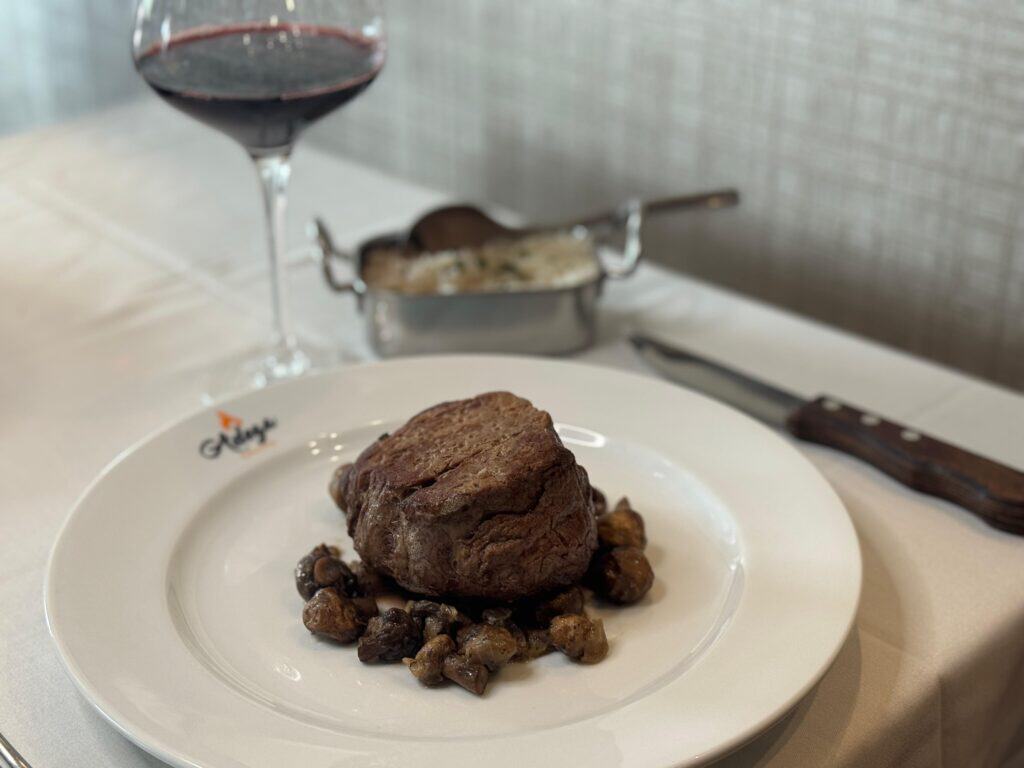
One of the reasons filet mignon is so highly regarded is that it doesn’t require complicated preparation. Because it’s naturally tender, the goal is to enhance its flavor rather than overpower it.
Some of the most popular preparation methods include:
- Open-Flame Grilling: Grilling over high heat creates a flavorful seared exterior while keeping the center tender and juicy.
- Brazilian Churrasco: In traditional churrasco, premium cuts are seasoned simply and cooked over an open flame before being carved fresh for guests, allowing the natural quality of the beef to shine.
- Reverse Searing: Some chefs slowly cook the steak to the desired internal temperature before finishing it with a quick, high-heat sear for an evenly cooked interior.
- Medium-Rare Cooking: Many steak enthusiasts prefer filet mignon cooked to medium-rare, which helps retain its tenderness and natural juices. However, the ideal doneness ultimately comes down to personal preference.
- Proper Resting: Allowing the steak to rest for a few minutes after cooking helps the juices redistribute throughout the meat, creating a more flavorful and satisfying bite.
- Simple Seasoning: Because filet mignon has a naturally delicate flavor, many chefs rely on just salt, pepper, and light seasoning to complement rather than mask the beef.
What Can You Expect at a Halal Brazilian Steakhouse?
Dining at a Brazilian steakhouse entails more than just ordering a single steak; it’s an experience centred on warmth, variety, and traditional churrasco service.
While offerings vary by restaurant, many Brazilian steakhouses serve premium cuts of beef continuously throughout the meal, allowing guests to enjoy a wide selection of freshly grilled meats.
A typical Brazilian steakhouse experience often includes:
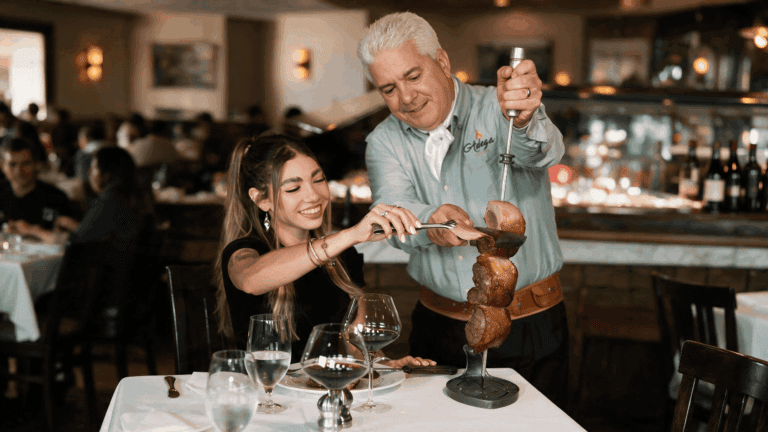
- Traditional Rodizio Service: Servers circulate through the dining room, carving a variety of grilled meats directly at your table.
- Tableside Carving: Premium cuts are sliced fresh upon request, allowing guests to enjoy each serving at its peak.
- Continuous Service: Rather than selecting just one entrée, guests can sample multiple cuts throughout their dining experience.
- Fresh Salad and Gourmet Sides: Many Brazilian steakhouses complement their grilled meats with a wide variety of salads, cheeses, seasonal vegetables, and traditional Brazilian side dishes.
- Premium Beef Selection: Depending on the restaurant, guests may enjoy cuts such as picanha, filet mignon, ribeye, sirloin, lamb, chicken, and more.
- Experienced Gaucho Chefs: Skilled gaucho chefs prepare meats over open flames using traditional Brazilian grilling techniques that have been passed down for generations.
For guests seeking halal dining, it’s always a good idea to verify current offerings before your visit. Some Brazilian steakhouses, including Adega Gaucha, offer halal dining options with advance notice or designated selections depending on location and availability.
Since menu offerings and sourcing may change, confirming availability directly with the restaurant ensures the best dining experience.
Where to Enjoy Halal Filet Mignon in Florida
If you’re looking to enjoy halal filet mignon as part of an authentic Brazilian churrasco experience, choosing a restaurant that values quality, transparency, and exceptional hospitality can make all the difference.
At Adega Gaucha Brazilian Steakhouse, we’re proud to offer guests a refined dining experience inspired by the rich traditions of Brazilian rodizio. Across our locations in Orlando, Kissimmee, and Deerfield Beach, our team is committed to serving premium fire-roasted meats, attentive tableside Gaucho service, and an inviting atmosphere for every occasion.
For guests seeking halal dining options, Adega Gaucha offers designated halal selections with advance notice, subject to location and availability. We recommend contacting your preferred location before your visit so our team can confirm current halal offerings and help create the best possible dining experience.
We invite you to experience the craftsmanship, hospitality, and unforgettable flavors that have made Adega Gaucha one of Florida’s premier Brazilian steakhouses and an award-winning restaurant.
Reserve your table today and discover the authentic taste of Brazilian churrasco at one of our Florida locations.
Frequently Asked Questions About Halal Filet Mignon
Does halal filet mignon taste different?
No. Halal filet mignon has the same naturally tender texture and mild, buttery flavor as any high-quality filet mignon. The halal process relates to how the beef is sourced and prepared, not the taste of the meat itself.
Is filet mignon healthier than ribeye?
Filet mignon is generally leaner than ribeye, containing less fat and fewer calories while still providing high-quality protein, iron, and essential nutrients. Ribeye offers richer marbling and flavor, whereas filet mignon is often preferred by those seeking a leaner premium steak.
Is filet mignon the most tender steak?
Yes. Filet mignon is widely recognized as one of the most tender cuts of beef because it comes from the tenderloin, a muscle that experiences very little movement. Its exceptionally soft texture makes it a favorite for fine dining and special occasions.
Does a Brazilian steakhouse serve halal beef?
Some Brazilian steakhouses offer halal beef, while others do not. Availability depends on the restaurant’s sourcing practices and menu. Guests should always contact the restaurant in advance to confirm current halal options, availability, and any reservation requirements.
What cut is closest to filet mignon?
Cuts from the beef tenderloin are the closest alternatives to filet mignon because they share a similarly tender texture. Other premium cuts like ribeye, strip steak, and picanha offer different flavor profiles but are generally richer and less delicate than filet mignon.