


So, if you have ever sat down for a traditional Brazilian churrasco and wondered about the golden, crumbly side dish served alongside the meat, you have probably encountered farofa.
At first glance, it may not look particularly complicated. It is not a sauce. It is not a creamy casserole. It is not designed to compete with the centerpiece of the table.
That is exactly the point!!!
Farofa is a toasted cassava flour preparation that brings crunch, toastiness, savory depth, and texture to Brazilian food. In Portuguese, the foundation is called farinha de mandioca, cassava or manioc flour, and the finished preparation can take many forms depending on the region, the ingredients available, and the family tradition behind it.
At a Brazilian steakhouse, farofa has an especially natural role. Churrasco brings fire, caramelization, rendered fat, and intensely savory grilled meat to the plate. Farofa brings a completely different texture and absorbs some of those juices without becoming heavy.
The result is a combination that feels simple until you taste it together.
So, what exactly is farofa, what does it taste like, how is toasted cassava flour made, and why has this humble Brazilian staple become such an important part of churrasco brasileiro?
Let’s get into it…
What Is Actually Farofa?
Farofa is a traditional Brazilian side dish made primarily from cassava flour that is toasted with fat and seasonings.
The Portuguese term you will often see is farinha de mandioca. Mandioca, also known as cassava or yuca, has been an important food crop in Brazil for generations. Brazilian agricultural and food research sources describe cassava flour as a culturally significant Brazilian product, with different regions producing flours that vary in color, texture, grain size, and flavor.
The transformation from flour to farofa is relatively straightforward:
Cassava flour + fat + seasoning + heat = farofa.
But that formula leaves plenty of room for personality.
Depending on the recipe, farofa may include ingredients such as:
- Butter
- Olive oil or another cooking fat
- Onion
- Garlic
- Bacon
- Brazilian sausage
- Eggs
- Fresh herbs
- Olives
- Vegetables
- Nuts
- Dried fruit
- Regional ingredients
There is no single universal Farofa recipe.
That matters because farofa brasileira is better understood as a culinary category than one rigid recipe. A version prepared in Bahia may taste very different from one served at a family churrasco in Southern Brazil.
What Does Farofa Taste Like?
If you have never tried it, the best way to understand farofa is through texture first.
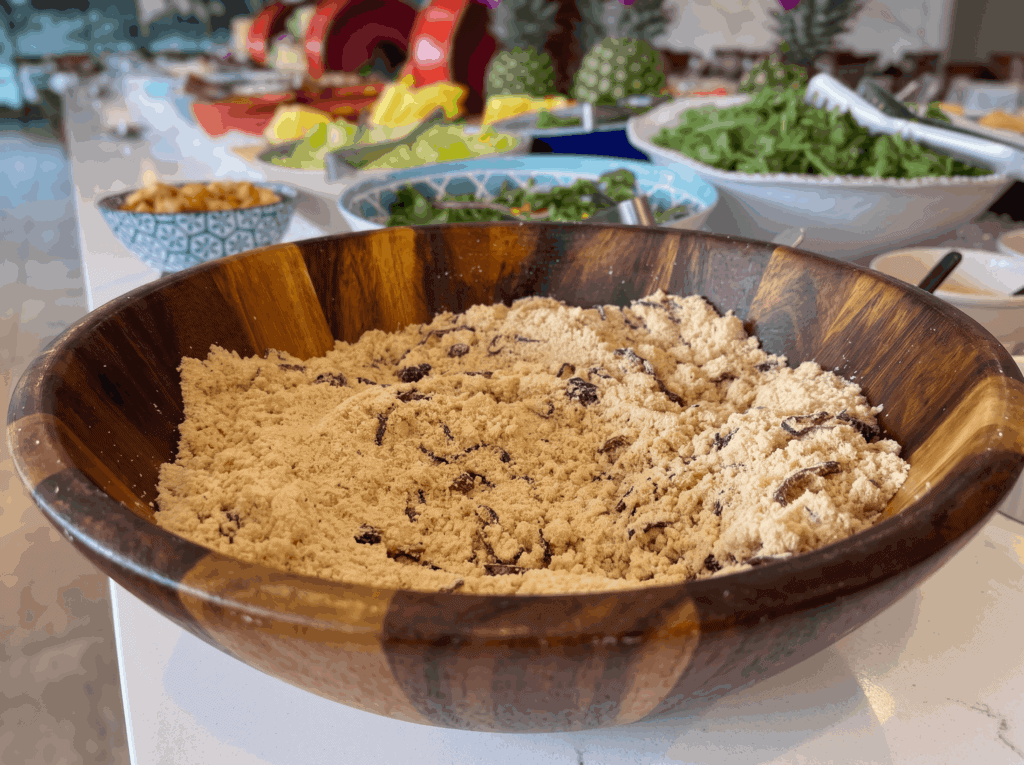
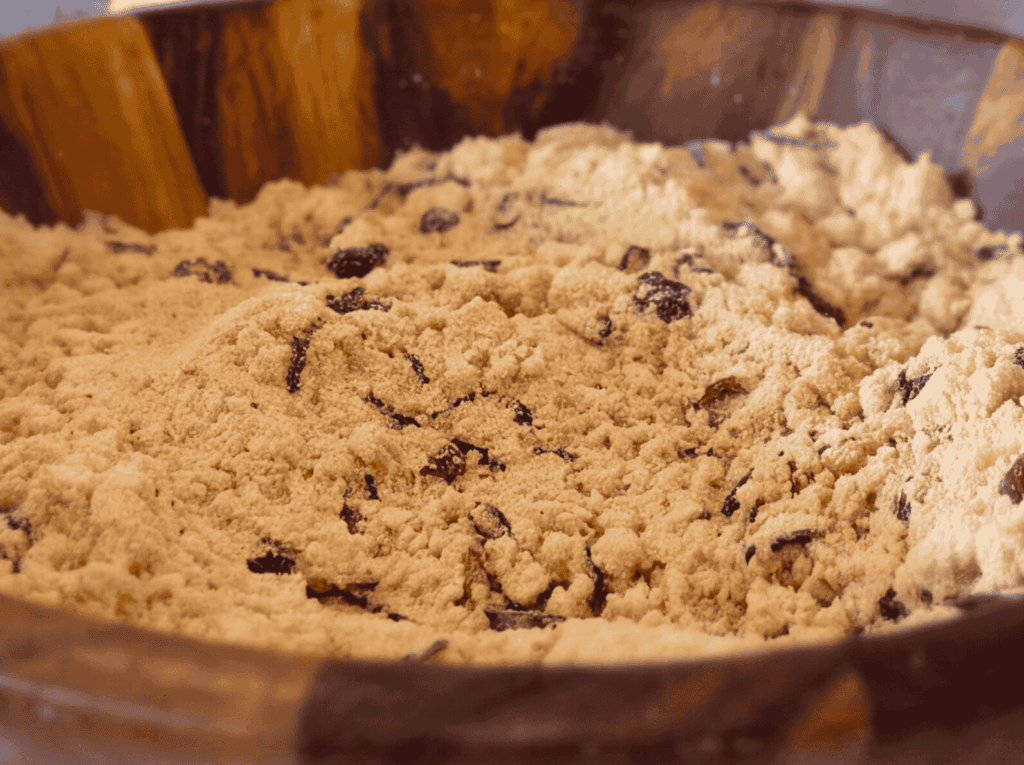
Good farofa is typically loose, crumbly, and toasted rather than soft or doughy. Depending on the grind of the cassava flour and how it is prepared, it can range from relatively fine and sandy to noticeably coarse and crunchy.
The flavor starts with the cassava flour itself, which develops a warm, toasted character as it cooks.
Then the supporting ingredients take over.
Butter can make it richer. Onion brings sweetness and aroma. Garlic adds savory depth. Bacon or sausage can introduce smokiness and salt. Herbs provide freshness.
But Farofa’s real strength is what happens when it reaches the rest of the plate.
A little farofa can pick up the juices from grilled beef, mingle with beans, or provide contrast against softer foods. Instead of adding another layer of moisture, it contributes structure and crunch.
That is why farofa works particularly well with grilled meat. It does not try to make churrasco more complicated. It makes the existing flavors more interesting.
Why Is Farofa Served With Churrasco?
There is a reason for the farofa and Brazilian barbecue feel being almost inseparable.
Traditional churrasco brasileiro is built around fire-grilled meats, but the experience is not only about the protein. Brazilian tables commonly bring together meat with rice, beans, fresh preparations, vegetables, sauces, and other accompaniments.
Farofa occupies a unique position among them.
Consider a slice of freshly grilled beef.
You have:
- A browned exterior
- Natural meat juices
- Smoky notes from the grill
- Richness from the beef
- A tender interior
Now add a spoonful of toasted cassava flour.
Suddenly, the bite has another dimension.
The farofa introduces a dry, crisp contrast while carrying the flavors around it. It can catch some of the savory juices from the meat without turning into a sauce.
This is one reason Farofa is so closely associated with Brazilian barbecue and grilled meats. It complements the cooking method rather than masking it.
At Adega Gaucha, farofa is included among the traditional Brazilian sides accompanying the restaurant’s Churrasco Extravaganza, alongside rice, vinagrete, collard greens, and yuca.
That combination tells you something important about Brazilian dining:
- The side dishes are not afterthoughts.
- They are part of how the entire plate comes together.
Farofa and Farinha de Mandioca: Are They the Same Thing?
Not quite.
This is one of the easiest points to misunderstand.
Farinha de mandioca is cassava flour.
Farofa is a preparation made using that flour.
Think of farinha de mandioca as the foundational ingredient and farofa as one of the ways Brazilian cooks transform it.
The flour itself can vary considerably. Brazilian sources document differences in grain size, color, processing methods, and regional styles. Embrapa notes that cassava flour is produced in multiple forms and that its characteristics can vary significantly between regions.
That variation matters because the flour influences the finished farofa.
- A finer flour can produce a more delicate texture.
- A coarser flour can create a more noticeable crunch.
- A more intensely toasted flour can bring deeper roasted notes.
So when someone says “farofa,” they are not necessarily describing one exact texture or recipe.
They are describing a family of preparations built around toasted flour.
How Is Farofa Traditionally Made?
The basic technique is simple, but timing matters.
First, the fat is heated in a pan. Butter, oil, bacon fat, or another cooking fat may be used depending on the recipe.
Aromatics such as chopped onion and garlic can then be cooked until fragrant.
If the recipe includes bacon, sausage, eggs, vegetables, or other ingredients, those are incorporated according to the desired style.
The cassava flour is added and toasted over controlled heat.
The flour needs enough heat to develop a pleasant toasted character, but excessive heat can produce bitterness or an overly dark result.
The finished farofa should remain loose rather than becoming wet or pasty.
That is also why farofa is so different from many Western flour-based side dishes. The objective is not to create a smooth consistency.
Regional Farofa: There Is More Than One Version
One of the biggest mistakes when discussing Brazilian cuisine is treating the country as if it has one uniform culinary tradition.
Brazil is enormous, and its food reflects that.
Farofa changes with the region.
In Bahia, for example, versions may incorporate azeite de dendê, or palm oil, producing a distinctive color and deeper regional character.
Other preparations may include eggs, bacon, sausage, onions, herbs, olives, vegetables, nuts, raisins, or even fruit.
Some are dry and intensely toasted.
Others are richer and more buttery.
Some are designed specifically to accompany feijoada.
Others are prepared for roasted meats, poultry, fish, or festive family gatherings.
The important takeaway is not that one version is “the authentic farofa.”
It is that regional and family variations are part of what makes farofa authentic.
The tradition lives in the variations.
Farofa With Picanha, Fraldinha, and Other Churrasco Cuts
Farofa becomes particularly interesting when you start pairing it with different Brazilian cuts.
Farofa + Picanha
Picanha is known for its characteristic fat cap and rich beef flavor. (Read our ultimate guide on: What is Picanha?)
Farofa provides the opposite texture: dry, toasted, and crunchy.
That contrast makes the pairing especially satisfying.
Farofa + Fraldinha
Fraldinha has a pronounced beef flavor and a texture that works beautifully with open-fire cooking.
A spoonful of farofa adds crunch without competing with the meat.
Farofa + Alcatra
Alcatra offers a balanced beef flavor and is another classic churrasco cut.
The toasted character of farofa complements the grilled surface of the beef while giving the bite additional texture.
Adega Gaucha’s current lunch menu includes Alcatra, Fraldinha, Picanha, and other churrasco selections as part of its Brazilian steakhouse offering.
This is where understanding Brazilian food becomes more rewarding.
You are not simply choosing “meat plus a side.”
You are building contrasts between fire, fat, freshness, acidity, and texture.
Farofa vs. Breadcrumbs: Are They the Same?
No. While they can look similar at first glance, farofa and breadcrumbs are fundamentally different ingredients and preparations.
| Farofa | Breadcrumbs |
| Made primarily from cassava flour (farinha de mandioca) | Made from bread, typically wheat-based |
| Toasted in fat with seasonings and other ingredients | Usually made by drying and grinding bread |
| Has a granular, toasted, crumbly texture | Usually has a finer, softer, or more uniform crumb |
| Traditionally associated with Brazilian cuisine | Used across many cuisines worldwide |
| Commonly served alongside churrasco, feijoada, rice, and beans | Commonly used for breading, toppings, stuffing, and binding |
| Adds toasted flavor and crunch to a plate | Primarily adds coating, structure, or texture |
| Can vary significantly by Brazilian region and family recipe | Varies mainly by bread type, grind, and preparation |
Is Farofa Gluten-Free?
Traditional farofa made exclusively from cassava flour is naturally free of wheat gluten. However, the finished dish depends on the ingredients and preparation environment.
If you are avoiding gluten because of celiac disease, an allergy, or medical advice, do not assume that every restaurant or packaged farofa is automatically safe. Ask about the ingredients and cross-contact practices before ordering.
Is Farofa Healthy?
There is no single nutritional profile for farofa because recipes vary significantly. Cassava flour itself is primarily carbohydrate-based, while the finished dish can gain additional fat, sodium, protein, or other nutrients depending on what is added.
A simple toasted cassava flour preparation is very different from a version loaded with bacon, sausage, butter, eggs, or other additions.
So it is more useful to think of farofa as a traditional accompaniment designed for flavor and texture, rather than trying to label every version as either “healthy” or “unhealthy.”
As with any food, ingredients, portion size, and the overall meal matter.
Farofa Is More Than a Side Dish
Calling farofa “toasted cassava flour” is technically useful, but it doesn’t tell the whole story.
The ingredient has a much deeper place in Brazilian food culture.
Brazilian research institutions trace the importance of cassava and cassava flour through Indigenous food traditions and regional culinary practices. Embrapa describes farinha de mandioca as a culturally important Brazilian food with significant regional variation.
That history helps explain why farofa appears in so many different contexts.
- It can be humble.
- It can be festive.
- It can be rustic.
- It can be refined.
And it can sit beside a beautifully grilled premium steak without feeling out of place.
Experience Farofa the Brazilian Way at Adega Gaucha
The easiest way to understand why farofa has such a loyal place in Brazilian cuisine is to taste it in the setting it naturally belongs to: alongside churrasco.
At Adega Gaucha, an award-winning steakhouse in Florida, Brazilian dining centers on Southern Brazilian churrasco, fire-grilled meats, Gaucho hospitality, and traditional accompaniments. The restaurant’s menus currently feature classic Brazilian sides alongside cuts including Picanha, Alcatra, and Fraldinha.
Farofa is one small part of that experience, but it demonstrates something fundamental about Brazilian cooking.
Great food is not always about adding more.
Sometimes it is about adding the right contrast.
And farofa brings that unmistakable toasted crunch.
If you are discovering Brazilian cuisine for the first time, don’t treat farofa as something to ignore between the steak and the next serving.
Try it with the meat…
Mix a little with rice and beans.
Let the juices from the churrasco meet the toasted cassava flour.
That is when farofa stops being an unfamiliar side dish and starts making sense.
Want to explore more of Brazilian churrasco? Visit Adega Gaucha Locations and experience traditional Brazilian flavors, fire-grilled cuts, and the accompaniments that make the entire table come together.
Frequently Asked Questions About Farofa
What is farofa made of?
Farofa is primarily made from cassava flour, known in Portuguese as farinha de mandioca. The flour is toasted with fat and can be combined with ingredients such as onions, garlic, bacon, sausage, eggs, herbs, vegetables, or other regional ingredients.
What is “farofa” in English?
Farofa is commonly explained in English as a Brazilian toasted cassava flour side dish or toasted cassava meal. There is no perfect one-word English translation because the preparation has its own culinary identity.
What does farofa taste like?
Farofa generally has a toasted, savory flavor with a loose, crumbly, or crunchy texture. Its final taste depends heavily on the fat, seasonings, and additional ingredients used.
Is farofa the same as cassava flour?
No. Cassava flour, or farinha de mandioca, is the main ingredient. Farofa is a prepared dish made by toasting that flour with fat and other ingredients.
Why is farofa served with Brazilian barbecue?
Its toasted texture provides contrast to juicy grilled meats, while the flour can absorb flavorful meat juices. That makes it a natural accompaniment to Brazilian churrasco.
What meat goes best with farofa?
Farofa pairs naturally with Brazilian churrasco cuts such as Picanha, Fraldinha, and Alcatra, as well as other grilled meats. The toasted texture provides contrast to rich, fire-grilled beef.
What is farinha de mandioca?
Farinha de mandioca is cassava flour made from mandioca, the Brazilian Portuguese term commonly used for cassava. It is an important ingredient in Brazilian cuisine and is used in preparations including farofa.
Where can I try Brazilian farofa?
Farofa is commonly served at Brazilian restaurants and churrascarias. At Adega Gaucha, farofa appears among the traditional Brazilian sides served with the restaurant’s churrasco offerings.


