


When people think about Brazilian churrasco, familiar names like Picanha often take center stage…
Yet among Gauchos and meat enthusiasts throughout Brazil, another cut has quietly earned a reputation for its remarkable balance of tenderness, flavor, and versatility.
That cut is Alcatra.
Alcatra has been a mainstay of Brazilian BBQ culture for many years. It represents everything that makes churrasco unique, regardless of how it is served at trendy Brazilian steakhouses, traditional churrascarias, or weekend family get-togethers: premium beef, meticulous preparation, and reverence for straightforward cooking methods that highlight natural flavours.
Outside Brazil, however, Alcatra remains far less familiar than many other premium beef cuts. Diners often encounter it on a Brazilian steakhouse menu without fully understanding where it comes from, how it’s prepared, or what makes it unique compared with more recognizable cuts like sirloin, ribeye, or filet mignon.
Understanding Alcatra not only helps diners appreciate authentic Brazilian cuisine but also offers insight into why Brazilian churrasco has become one of the world’s most celebrated grilling traditions.
In this guide, we’ll explore where Alcatra comes from, how Brazilian Gauchos prepare it, what it tastes like, how it compares with other premium cuts, and why it continues to hold a special place at authentic Brazilian steakhouses. So, let’s stay with us!
Ultimate Understanding of Alcatra: Brazil’s Everyday Premium Cut
Alcatra is one of the most popular and adaptable beef cuts in Brazil, making it more than just another steak…
Rather than being reserved only for special occasions, Alcatra regularly appears at family barbecues, neighborhood churrascos, and traditional rodízio restaurants across the country. Its popularity comes from achieving something many cuts struggle to balance:
It delivers excellent flavor while remaining consistently tender and adaptable to different cooking styles.
Anatomically, Alcatra comes from the upper portion of the hindquarter. Unlike heavily marbled cuts that rely on fat for richness, Alcatra offers a cleaner beef profile with enough natural marbling to remain juicy when grilled correctly.
Brazilian butchers often divide Alcatra into several smaller muscles, each with slightly different characteristics. Depending on the region, portions of the cut may be prepared as steaks, skewered for churrasco, or sliced into medallions before grilling over open flames.
Alcatra, a steak that combines quality, consistency, and outstanding cooking performance without sacrificing real flavour, is often regarded as one of Brazil’s everyday high-end cuts due to its adaptability.
For guests visiting an authentic Brazilian steakhouse, Alcatra represents another opportunity to experience the diversity of Brazilian beef beyond the internationally recognized Picanha.
Where Does Alcatra Actually Come From?
Understanding where Alcatra comes from helps explain why it performs so well over an open flame.
The cut is taken from the top sirloin region of the animal’s hindquarter, an area that naturally balances tenderness with robust beef flavor. Because these muscles receive moderate use throughout the animal’s life, they develop enough structure to create satisfying texture while remaining tender when prepared correctly.
Although Alcatra is sometimes compared with American sirloin, the Brazilian approach is slightly different.
In Brazil, butchers separate the muscles with remarkable precision, creating individual cuts that highlight each section’s unique characteristics rather than treating the entire sirloin as one uniform steak.
This attention to butchery is one reason Brazilian beef culture has earned worldwide recognition. Every cut is selected not only for where it comes from but also for how it performs on the grill.
Traditional churrasco embraces this philosophy by allowing each cut to express its own qualities rather than masking them with heavy marinades or complex seasoning.
Instead, coarse salt, high heat, and careful timing remain the defining ingredients…
The result is beef that reflects both the craftsmanship of Brazilian butchers and the grilling traditions passed down through generations of Gauchos.
Why Is Alcatra So Popular in Brazilian Churrasco?
Ask experienced Gauchos to name the beef cuts they consistently rely on during churrasco, and Alcatra will almost always be part of the conversation.
Alcatra performs exceptionally well over live fire because it maintains its structure while developing a beautifully caramelized exterior and a juicy interior. The cut absorbs the subtle smokiness of hardwood charcoal without overpowering its naturally rich beef flavor.
Another reason for its popularity is versatility.
Depending on the occasion, Alcatra may be:
- Grilled whole and sliced tableside
- Prepared on traditional churrasco skewers
- Cut into thick steaks
- Served as medallions
- Finished over charcoal or wood fire
Each preparation highlights slightly different characteristics while preserving the qualities that make Alcatra so widely appreciated.
At traditional rodízio restaurants, Alcatra often complements more famous cuts like Picanha, Fraldinha, and Filet Mignon, allowing guests to experience another side of authentic Brazilian churrasco.
Rather than competing with these premium selections, Alcatra expands the variety that defines the Brazilian steakhouse experience.
Alcatra vs. Sirloin: What’s the Difference?
Because Alcatra originates from the sirloin region, many diners assume the two names describe exactly the same cut.
The reality is more nuanced.
While they’re closely related, differences in butchery, preparation, and culinary tradition create a noticeably different dining experience.
| Feature | Alcatra | Traditional Sirloin |
| Origin | Brazilian top sirloin region | General sirloin section |
| Flavor | Rich, balanced, clean beef flavor | Robust beef flavor with regional variation |
| Texture | Tender with a fine grain | Slightly firmer depending on the cut |
| Preparation | Traditionally grilled over open flames using coarse salt | Commonly grilled, pan-seared, or roasted |
| Serving Style | Frequently carved during churrasco and rodízio service | Usually served as an individual steak |
| Culinary Tradition | Brazilian churrasco | American and international steakhouse cuisine |
Although they share anatomical similarities, the dining experience is quite different.
Brazilian churrasco emphasizes the natural qualities of Alcatra through open-flame grilling and tableside carving, whereas sirloin in many Western steakhouses is typically served as a plated entrée.
For guests interested in exploring authentic Brazilian cuisine, Alcatra offers an opportunity to experience how traditional preparation techniques can transform a familiar cut into something distinctly Brazilian.
How Brazilian Steakhouses Prepare Alcatra
One of the defining characteristics of authentic churrasco is restraint.
Alcatra is a perfect example of this philosophy…
Preparation typically begins with carefully trimming the cut while preserving the balance of lean meat and natural fat that contributes to its signature texture.
The beef is then seasoned simply with coarse salt before being placed over hardwood charcoal or an open flame.
Throughout the grilling process, experienced Gauchos monitor temperature, positioning, and cooking time with remarkable precision.
Instead of cooking every steak identically, they adjust each cut according to its size, thickness, and natural characteristics.
Once perfectly grilled, Alcatra is carved fresh and served immediately.
What Does Alcatra Taste Like?
Every premium beef cut has its own personality. Some are prized for intense marbling, while others are appreciated for exceptional tenderness or bold flavor. Alcatra stands out because it strikes a balance between all three, making it one of Brazil’s most versatile cuts for churrasco.
Its flavor is rich and distinctly beef-forward without feeling overly heavy. Compared with highly marbled steaks like ribeye, Alcatra offers a cleaner taste that allows the quality of the beef to remain at the forefront. At the same time, it carries enough natural marbling to stay juicy when grilled over high heat.
Texture is another reason Alcatra has earned its place in Brazilian barbecue traditions.
When prepared correctly, it delivers a tender bite with just enough structure to remind you you’re enjoying a premium grilled steak rather than a delicate filet. That balance creates a satisfying eating experience that appeals to a wide range of diners.
Traditional churrasco preparation further enhances these qualities.
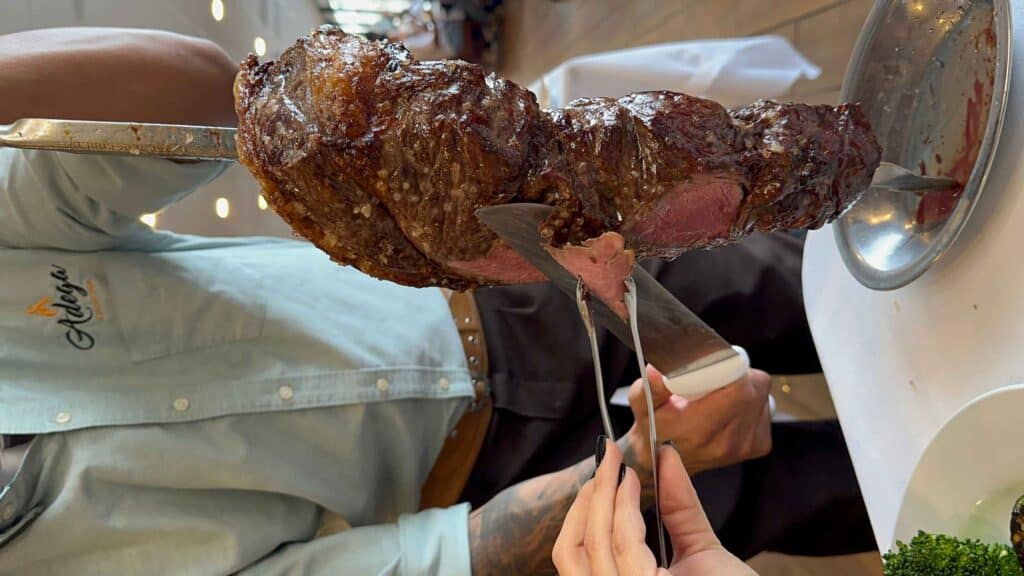
As the exterior develops a lightly caramelized crust over hardwood charcoal, the interior remains juicy and flavorful. Each freshly carved slice captures the smoky aroma of open-fire grilling while preserving the steak’s natural tenderness.
For many guests, Alcatra represents the perfect middle ground, amazing enough for serious steak enthusiasts yet approachable for anyone discovering Brazilian churrasco for the first time.
Is Alcatra a Healthy Choice?
Like many lean premium beef cuts, Alcatra can be part of a balanced diet when enjoyed as part of an overall healthy eating pattern.
From a nutritional perspective, Alcatra naturally provides several essential nutrients that make beef an important source of high-quality protein.
These include:
- Complete protein, supporting muscle maintenance and recovery.
- Iron, which contributes to normal oxygen transport throughout the body.
- Vitamin B12, important for energy production and nervous system function.
- Zinc, which supports immune health and normal metabolic processes.
- Selenium, an antioxidant mineral that helps protect cells from oxidative stress.
Because Alcatra generally contains less marbling than some heavily marbled steak cuts, many diners appreciate the balance it offers between flavor and leanness.
Preparation also plays an important role.
As with any premium beef, portion size and overall dietary habits remain the most important considerations. Choosing quality ingredients and thoughtful preparation is often just as important as selecting the cut itself.
What Pairs Well with Alcatra?
One of Alcatra’s greatest strengths is how naturally it complements traditional Brazilian flavors without overpowering them.
Popular pairings include:
- Farofa – Toasted cassava flour that adds texture and a subtle nutty flavor.
- Vinagrete – A fresh tomato, onion, herb, and vinegar salsa that balances the richness of grilled beef.
- Brazilian Rice and Beans – A timeless combination found throughout Brazilian cuisine.
- Grilled Seasonal Vegetables – Fresh vegetables that complement rather than compete with the steak.
- Chimichurri – A vibrant herb sauce that enhances the beef’s natural flavor.
- Full-Bodied Red Wines – Cabernet Sauvignon, Malbec, and Merlot pair particularly well with Alcatra’s balanced richness.
Together, these accompaniments reflect the harmony of flavors that defines an authentic Brazilian churrasco experience.
Why Alcatra Continues to Be a Brazilian Steakhouse Favorite
Serving the priciest piece of beef is not a measure of authenticity. It is demonstrated by honouring culinary customs, using premium ingredients, and carefully preparing each cut. Alcatra embodies that philosophy.
For decades, it has remained one of Brazil’s most trusted churrasco cuts because it consistently delivers excellent flavor, versatility, and reliable grilling performance. Whether enjoyed at a neighborhood barbecue or a renowned Brazilian steakhouse, it represents the craftsmanship that defines Brazilian beef culture.
At an authentic rodízio restaurant, Alcatra is often served alongside celebrated cuts such as Picanha, Fraldinha, Halal Filet Mignon, and Costela, giving guests the opportunity to appreciate the diversity of Brazilian churrasco rather than focusing on a single steak.
That variety is one of the defining characteristics of the Brazilian dining experience.
Each cut contributes something unique, allowing guests to explore different textures, flavors, and traditional grilling techniques throughout the meal.
For anyone looking to understand why Brazilian churrasco has earned worldwide recognition, Alcatra is undoubtedly one of the best places to begin.
Discover Authentic Brazilian Churrasco at Adega Gaucha
Learning about Alcatra offers a deeper appreciation for Brazil’s rich culinary heritage, but experiencing it firsthand is something entirely different.
At Adega Gaucha, authentic Brazilian churrasco is rooted in the traditions of Southern Brazil, where skilled Gauchos prepare premium cuts over open flames using time-honored grilling techniques. Every cut is carefully selected, expertly grilled, and carved tableside to showcase its natural flavor and quality.
Experiencing churrasco in a real top-rated Brazilian steakhouse provides a unique perspective on why these customs have persisted for generations, regardless of whether you are already familiar with Alcatra or are discovering Brazilian beef cuts for the first time.
From premium fire-roasted selections and the Gourmet Table to attentive hospitality and a welcoming atmosphere, every detail is designed to celebrate the art of Brazilian dining.
If you’re ready to discover authentic churrasco, reserve your table at Adega Gaucha and experience the flavors, craftsmanship, and hospitality that have made Brazilian steakhouses celebrated around the world.
Frequently Asked Questions About Alcatra
Is Alcatra the same as sirloin?
Well…not exactly. Alcatra comes from the sirloin region, but Brazilian butchery separates and prepares the cut differently, resulting in a distinct texture, grilling method, and dining experience.
What does Alcatra steak taste like?
Alcatra has a rich, clean beef flavor with moderate marbling and a tender texture. It’s less fatty than ribeye while offering more structure than filet mignon, making it a favorite for Brazilian churrasco.
How is Alcatra traditionally cooked?
Traditional Brazilian churrasco prepares Alcatra over hardwood charcoal using only coarse salt. The steak is grilled over open flames and carved fresh to preserve its natural juices and flavor.
Is Alcatra a tender cut of beef?
Yes. When grilled properly and sliced against the grain, Alcatra is known for its tender texture and balanced bite, making it one of Brazil’s most popular churrasco cuts.
Where can I try authentic Alcatra?
For an authentic experience, visit Adega Gaucha Brazilian Steakhouse, where premium churrasco cuts–including traditional Brazilian favorites–are expertly grilled by Gauchos and carved fresh tableside in true rodízio style.


