

Picanha (pronounced pee-KAHN-yah) is the top sirloin cap: a tender, triangle-shaped beef cut from the top of the rump, covered by a thick layer of fat. In Brazil, it is the most celebrated steak on the churrasco grill, seasoned only with coarse salt, folded onto skewers and roasted over fire. In the United States, you will find the same cut sold as top sirloin cap, coulotte, or rump cap.
If you have ever been to a Brazilian steakhouse, picanha is the cut people talk about on the way home. This guide explains where it comes from on the cow, why it is still hard to find at many American butchers, how gauchos prepare it, how it compares with ribeye and filet mignon, and where to taste it carved tableside in Florida.
What Is Picanha Steak?
Picanha is a single muscle that sits on top of the sirloin, near the cow’s rump. Butchers remove it in one piece, a roughly triangular roast that usually weighs about 2 to 3 pounds, with a fat cap around half an inch thick on one side.
That fat cap is the whole point. In Brazil, it is never trimmed off before cooking. As the meat roasts, the fat melts slowly, bastes the beef, and turns crisp and salty on the outside. The result is a steak with a deep beef flavor, a juicy bite, and more tenderness than its sirloin location suggests.
The name has a cowboy story behind it. The most common explanation is that picanha comes from picana, the long pole that cattle herders in southern South America used to drive their animals. The tip of the pole was aimed at the rump, the area where this cut sits.
Where Is Picanha on the Cow?
Picanha comes from the hindquarter. Picture the sirloin, the section between the short loin and the round: the picanha is the cap muscle that sits on top of it, toward the tail. In butcher terms, it is the top sirloin cap, part of the muscle known as the biceps femoris.
Because this muscle does relatively little work, it stays tender. Because it sits at the surface of the animal, it carries that natural layer of fat. Those two traits together are why Brazilians treat it as the best cut on the grill.
What Is Picanha Called in the USA?
Picanha goes by several names in American stores and restaurants:
- Top sirloin cap: the most common label at supermarkets and warehouse clubs
- Coulotte (or culotte): the name many butchers and steakhouses use
- Rump cap: the term used in the UK and Australia
- Picanha: more stores now use the Brazilian name as the cut grows popular
So why is picanha less famous in America? Traditionally, US butchers did not sell the cap on its own. They left it attached to the top sirloin and cut the whole section into sirloin steaks, and they trimmed away most of the fat. That fat is exactly what Brazilians prize. If you shop for picanha in the US, ask for a top sirloin cap with the fat left on.
What Does Picanha Taste Like?
Picanha sits between a ribeye and a sirloin. It has the beefy, slightly mineral flavor of sirloin, with a juiciness that comes from the rendered fat cap rather than from marbling inside the meat. The crust is salty and crisp; the center stays rosy and tender when it is cooked medium-rare.
Guests who try it for the first time usually describe it the same way: rich but not heavy, tender with a little chew, and full of beef flavor. If you like your steak to taste like steak, picanha is a safe bet.
How Gauchos Cut, Salt and Grill Picanha
The traditional churrasco method is simple, which is why every step matters:
- Cut with the grain into thick steaks. The whole cap is sliced into pieces about two fingers thick, each one keeping its strip of fat.
- Fold into a C-shape. Each steak is bent into a crescent with the fat facing out, then threaded onto a long skewer called an espeto.
- Season with coarse salt only. Brazilians use sal grosso, a rock salt that seasons the surface without drawing out too much moisture.
- Roast over fire. The skewers turn slowly beside the heat until the fat renders and the outside forms a salty crust.
- Slice tableside, against the grain. The gaucho carves the outer layer onto your plate, so every slice has crust, fat, and tender meat.
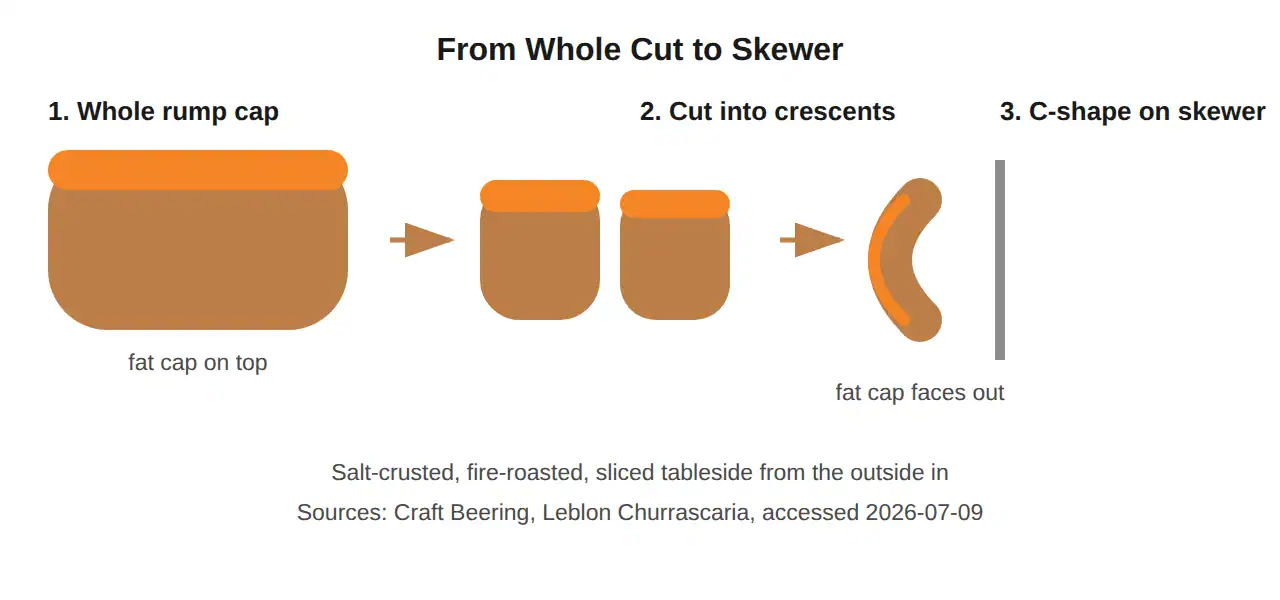
Because the outside slices cook more than the center, a single skewer offers different levels of doneness. That is part of the fun at a churrascaria: you can ask the gaucho for an outer slice if you like it more done, or a center slice if you prefer it rare. Read more about this fire-roasting tradition in our guide to Brazilian churrasco, or the history of churrasco itself.
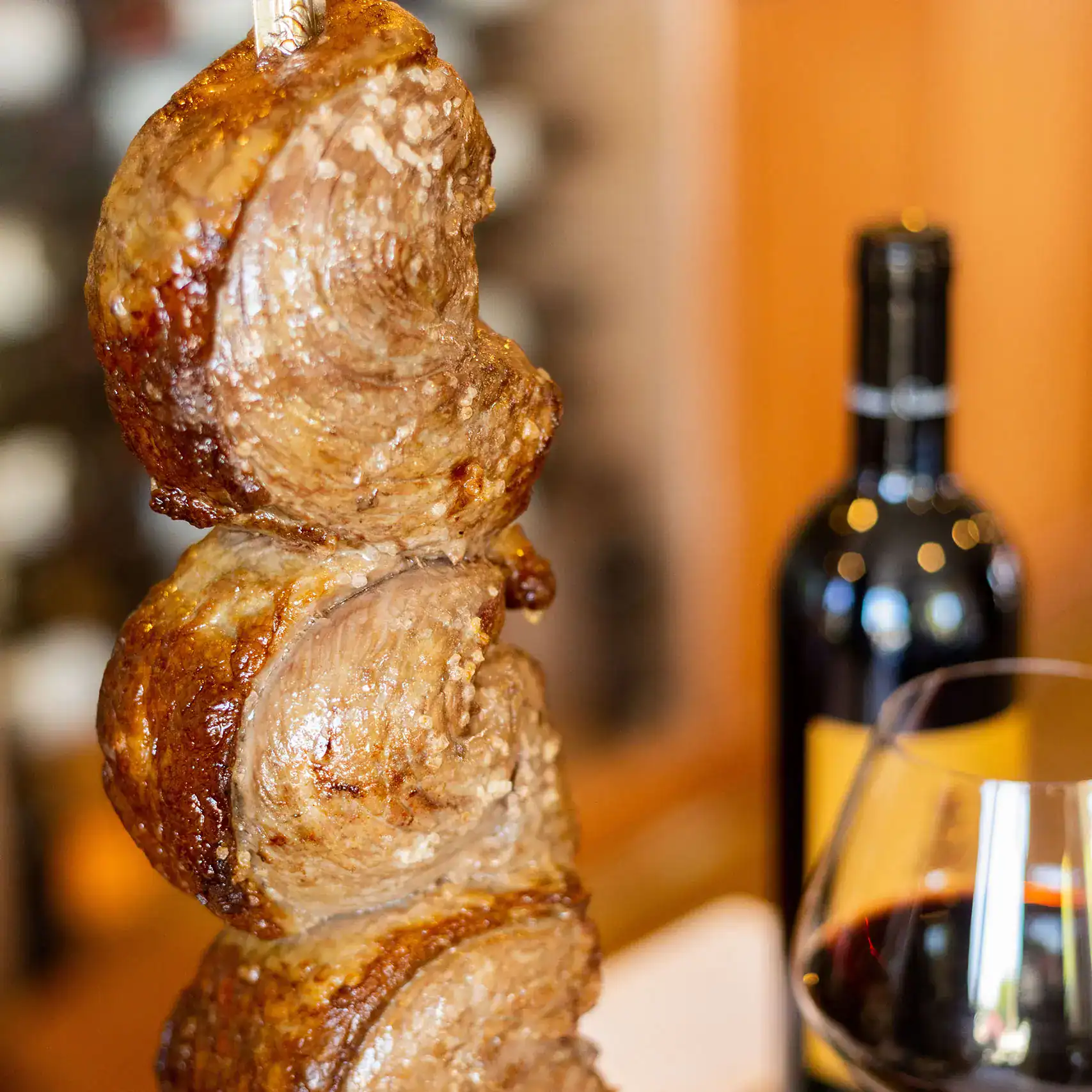
Picanha vs Ribeye vs Sirloin vs Filet Mignon
Each of these steaks is excellent. They simply deliver different experiences:
| Cut | Where it comes from | Where the fat is | Texture | Flavor | Best cooked |
| Picanha | Top sirloin cap (rump) | Thick outer fat cap | Tender with a little chew | Bold, beefy, salty crust | Skewered over fire, medium-rare |
| Ribeye | Rib section | Marbled through the meat | Very tender, juicy | Rich and buttery | Grill or cast iron |
| Top sirloin | Sirloin, below the cap | Lean, little fat | Firmer | Clean beef flavor | Quick sear, not past medium |
| Filet mignon | Tenderloin | Very lean | Softest of all | Mild and delicate | Seared, often with a sauce |
In short: choose ribeye if you love marbling, filet mignon if tenderness is everything, and picanha if you want the most flavor from a single slice. At a Brazilian steakhouse, you do not have to choose. Our beef ancho (ribeye) and filet mignon come around on skewers too.
Picanha also has two close Brazilian relatives worth trying. Fraldinha (bottom sirloin flap) is looser-grained and extra juicy, while alcatra (top sirloin) is leaner and firmer.
How to Enjoy Picanha at a Brazilian Steakhouse
At a churrascaria, picanha arrives through rodizio service: gauchos walk the dining room with skewers and carve for anyone with a green card on the table. If you are new to the format, our rodizio guide explains how it works. A few tips from regulars:
- Ask for picanha by name. If it has not reached you yet, any gaucho can bring it over.
- Choose your doneness. Outer slices are more done; center slices are rarer.
- Eat the fat. The crisp, salted edge is where most of the flavor lives.
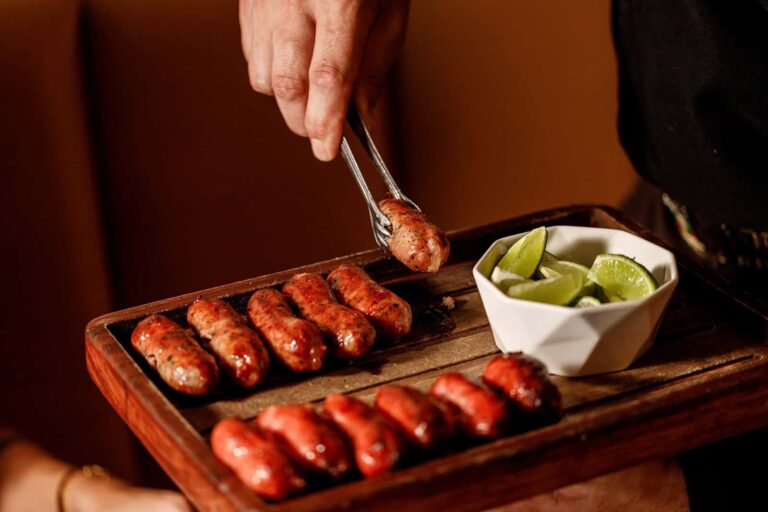
- Pair it like a Brazilian. Add a spoon of farofa, alternate with garlicky linguiça, and pick a bold red from our wine pairing guide.
- Save room. Finish the Brazilian way with one of our Brazilian desserts.
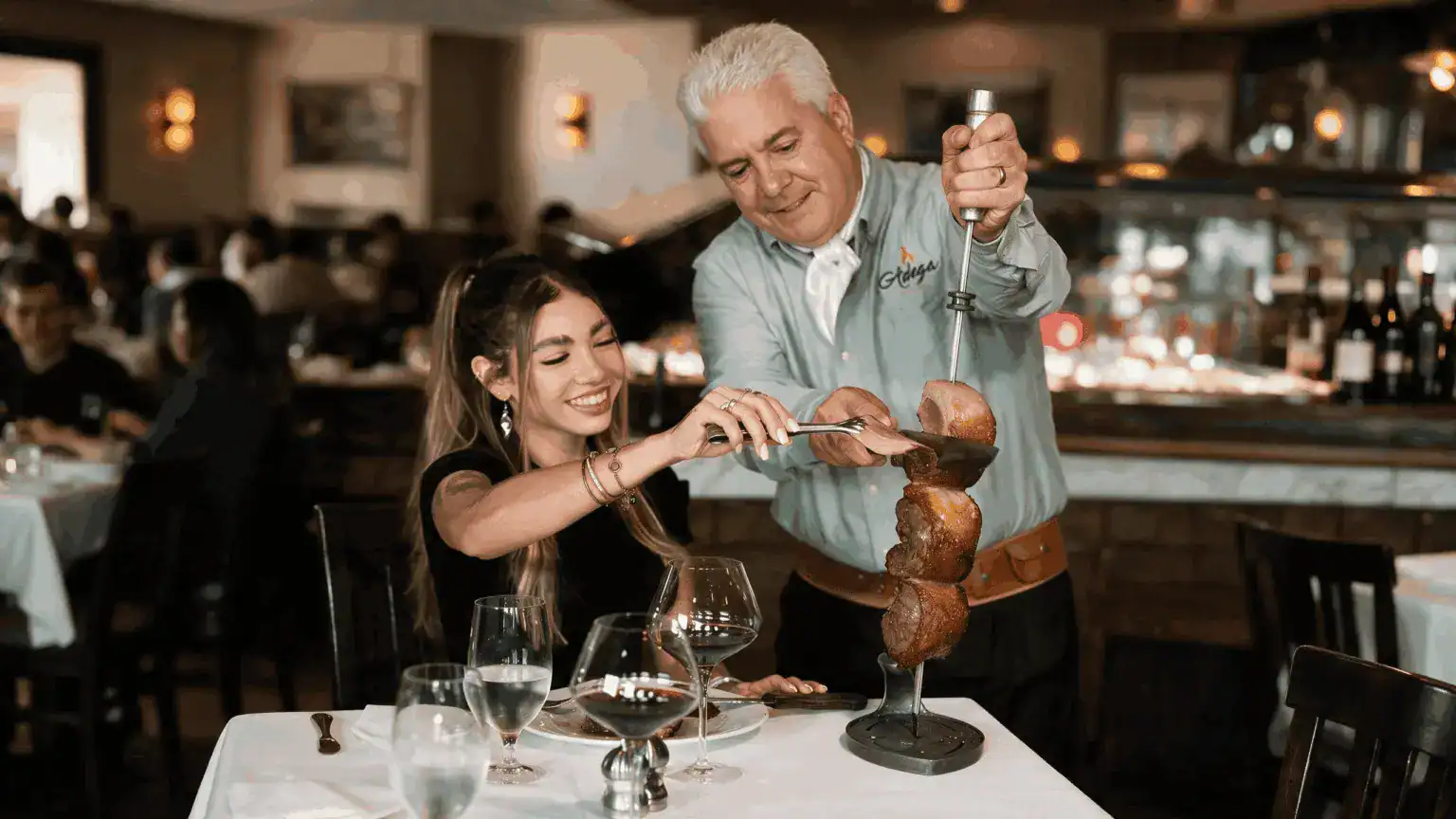
Where to Eat Picanha in Florida
At Adega Gaucha, picanha is part of every Full Churrasco Experience, carved tableside along with more than a dozen other fire-roasted cuts, plus the Gourmet Table and your choice of sides. Prefer a single plate? Picanha is also on our à la carte menu. Prices vary by location, so check the dinner menu before you go.
- Adega Gaucha Orlando: Brazilian churrasco in the heart of Central Florida
- Adega Gaucha Kissimmee: close to the theme parks, ideal for families and groups
- Adega Gaucha Deerfield Beach: between Boca Raton and Fort Lauderdale
Celebrating? Sign up for our birthday offer before your visit, or let our group dining team plan a churrasco for your party.
Taste Brazil’s favorite steak, carved at your table. See the menu or choose your location and reserve.
Picanha FAQs
What is picanha called in the USA?
In the United States, picanha is usually sold as top sirloin cap. Butchers also call it coulotte or culotte, and in the UK and Australia it is known as rump cap. More American stores now use the Brazilian name, picanha.
Is picanha a good cut of steak?
Yes. Picanha is tender, very flavorful, and juicy thanks to its fat cap, and it is the most prized cut in Brazilian churrasco. It is also more affordable than ribeye or filet mignon in most US stores.
Why is picanha not popular in America?
American butchers traditionally left the cap attached to the top sirloin and trimmed off most of its fat, so the cut was rarely sold on its own. Brazilian steakhouses and specialty butchers have made it far more popular in recent years.
What is picanha called at Costco?
Costco and other warehouse stores usually label picanha as top sirloin cap, and some stores now sell it under the name picanha. Look for a triangular roast with a thick layer of fat on one side.
Is picanha the same as tri-tip?
No. Tri-tip comes from the bottom sirloin, while picanha is the top sirloin cap. Picanha has a thick fat cap and a more uniform shape, which is why it is preferred for churrasco skewers.
Is ribeye better than picanha?
Neither is better; they are different. Ribeye gets its richness from marbling inside the meat, while picanha gets its flavor and juiciness from the outer fat cap and a salty, fire-roasted crust.
Where can I eat picanha in Florida?
You can eat picanha carved tableside at Adega Gaucha Brazilian Steakhouse in Orlando, Kissimmee, and Deerfield Beach. It is included in the Full Churrasco Experience and is also available à la carte.